
Pavers vs. Decorative Stone for Outdoor Spaces
A practical comparison for Florida homeowners thinking about a property refresh
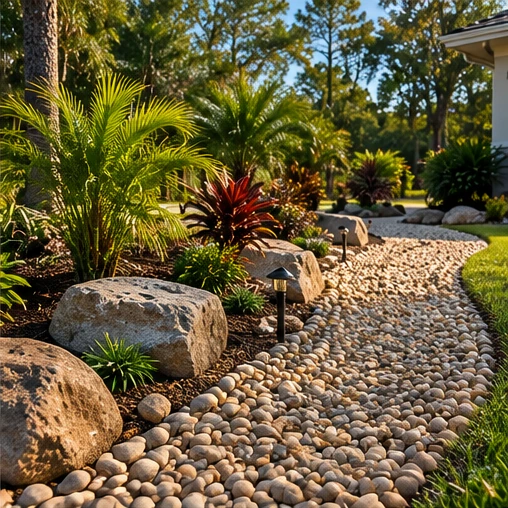
Compare appearance, use, maintenance, and site considerations when choosing a surface.
Start With How the Space Will Be Used
For a defined walking path or sitting area, pavers may give a more organized, finished surface. Decorative stone can be useful for garden beds, accent strips, or areas intended primarily for appearance rather than regular foot traffic.
The best fit depends on use, upkeep expectations, surrounding landscaping, and existing ground conditions.
Consider the Maintenance
Paver joints can collect weeds and debris, and loose stone can migrate outside an intended bed. Landscape edging, routine care, and material choices influence the appearance over time.
Neither option is maintenance-free, so consider the amount of upkeep you are comfortable with.
Plan Around Existing Features
Before changing an outdoor area, note tree roots, irrigation, the slope of nearby ground, and where rainfall currently flows. Protecting these features is part of responsible planning.
Some installations or site changes can involve permits or regulated work. The proper scope must be identified before a contractor offers to perform it.
Turn the Idea Into a Project Brief
Measure the approximate area, gather inspirational photographs, explain whether vehicles or pedestrians will use it, and share the address or city.
DJRC welcomes suitable surface and decorative-material inquiries and evaluates each proposal against local requirements and the work actually involved.
Planning a property project?
Share your goals, location, approximate size and site photos to begin a conversation.
Discuss Your Project ↗Educational overview, not a quote, guarantee of service availability, engineering advice, or determination of licensing or permit requirements.